 Optics Trading Post
Guides / Glass a hillside
How to Glass a Hillside
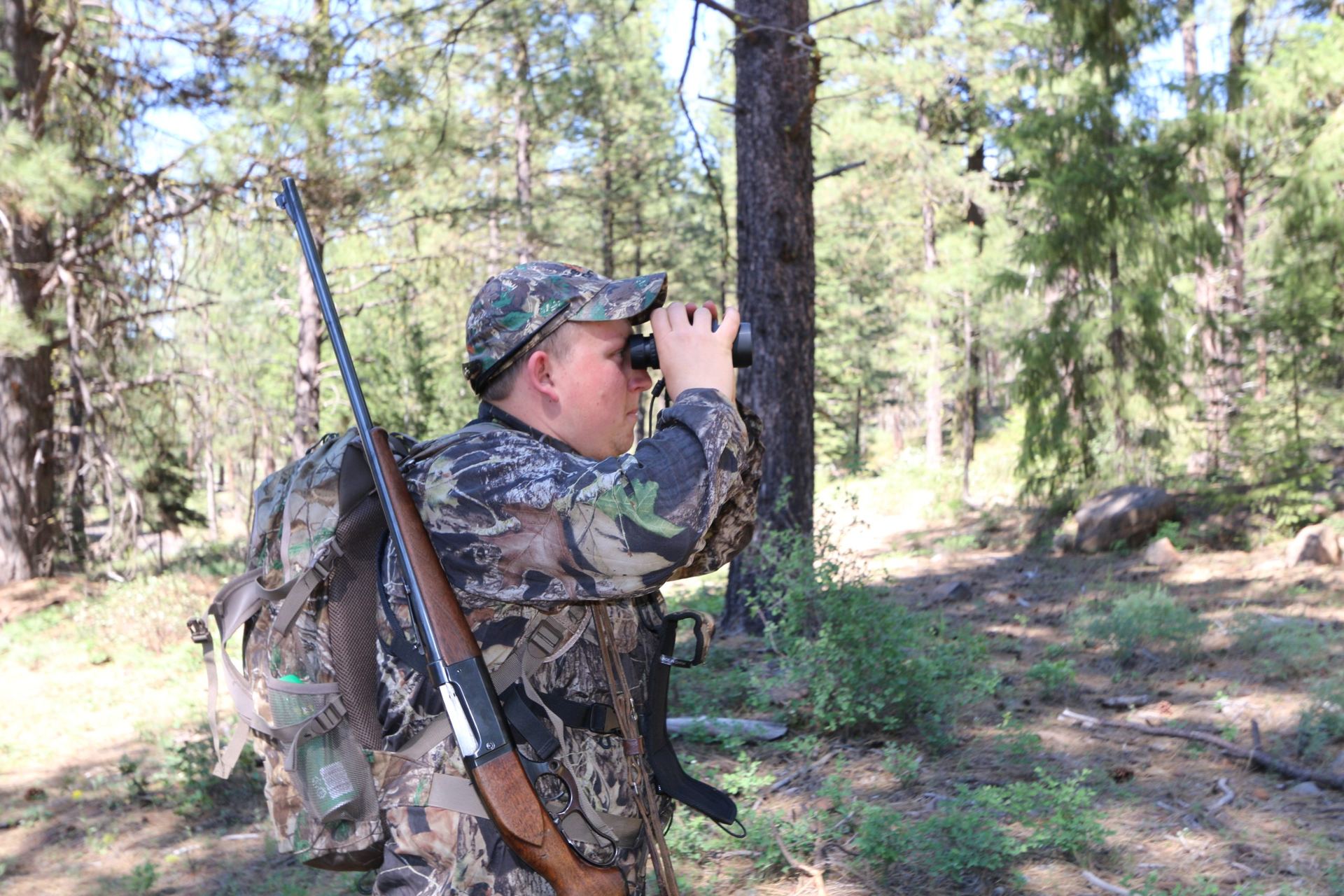
Glassing is how western hunters find animals before animals find them. Done well, it lets you cover miles of country without taking a step. Done poorly, it turns into hours of staring at rocks. The difference comes down to a steady view, a methodical pattern, and patience.
Pick the Right Spot
Find a vantage point that lets you see a lot of country while staying hidden. Sit below the skyline, with terrain or brush behind you to break up your outline. Get there before first light so you are settled when animals are moving.
Keep the sun behind you or to your side when you can. Glassing into the sun washes out the image and can flash light off your lenses.
Think about where animals will be. In the morning and evening, look at feeding areas such as open slopes and meadow edges. During midday, focus on shade, timber edges, and bedding cover under rims and in pockets.
Get Steady: Use a Tripod
The biggest jump in glassing quality comes from putting your binocular on a tripod. Even the steadiest hands transmit small tremors that hide detail. On a tripod, the image goes still, and your eyes can spot the small things that reveal game: a flicking ear, a horizontal back line, the white of a rump patch, or an antler tip.
Use a tripod adapter that connects to the binocular's threaded hinge. (Ours: the Vortex Pro binocular adapter on Amazon.) Set the tripod low when sitting, and keep the head smooth so you can pan slowly. If you have no tripod, brace on your knees, a pack, or a rock.
The Grid Method
Random sweeping misses animals. The grid method makes you see every part of a slope.
- Divide the hillside. Mentally break the slope into sections, using landmarks such as rock bands, tree lines, or drainages.
- Work one section at a time. Start at one corner, usually closest to you.
- Move in overlapping views. Look at one field of view, hold still for several seconds, then shift about half a field and look again. Overlap each view with the last.
- Go in rows. Sweep left to right across the section, drop down a row, then sweep back. Think of reading a page.
- Look, do not scan. Stop on each view long enough to really see it. Animals are rarely obvious. Look for parts, not whole animals.
- Repeat. Light changes and animals move. Glass the same country again later.
Start with the near country and work out. It is easy to look past an animal close by while searching far ridges.
What to Look For
- Shapes: horizontal lines in a vertical world, curved backs, legs.
- Color: a patch that is a little too tan, gray, or white.
- Movement: a tail, an ear, a head turning.
- Shine: sunlight on antlers or a wet nose.
When to Switch to a Spotting Scope
Binoculars are for finding. A spotting scope is for judging and confirming. Switch to the spotter when:
- You see something that might be an animal but cannot tell for sure.
- You need to judge an animal's size, antlers, or sex before committing to a stalk.
- You want to search very distant country for animals your binoculars cannot resolve.
- You are watching a bedded animal and want to plan a route.
Spotting scopes need a tripod. Start at low magnification to find the subject, then zoom in. Heat shimmer, called mirage, often limits how much magnification you can usefully use on warm afternoons. If the image swims, back off the power.
Higher power binoculars, such as 10x or 12x on a tripod, can bridge the gap. Many hunters glass with 10x binoculars on a tripod and only reach for the spotter to confirm. Our glassing kit page explains what a full setup includes. If you are choosing binoculars for glassing, see our hunting binoculars guide. Once you find an animal, a hunting rangefinder helps plan the approach and the shot.
Comfort Counts
Glassing well is about time behind the glass. Bring a sit pad, warm layers for cold mornings, and snacks. Rest your eyes by looking away every so often. A comfortable hunter glasses longer and sees more.
FAQ
How long should I glass one hillside?
Long enough to work the full grid at least once, and often more. Many experienced hunters glass a promising basin for an hour or more, especially at prime times.
Do I really need a tripod for binoculars?
You do not need one, but it makes a big difference. A steady image shows much more detail.
What magnification is best for glassing?
Many western hunters use 10x on a tripod and a spotting scope for confirming. In closer country, 8x works well.
More: All guides · Optics finder